No action
No proposal was produced.
Dry run only Agent Control Plane
 with
with

CONTROL PLANE 01 Synthetic portfolio deployment
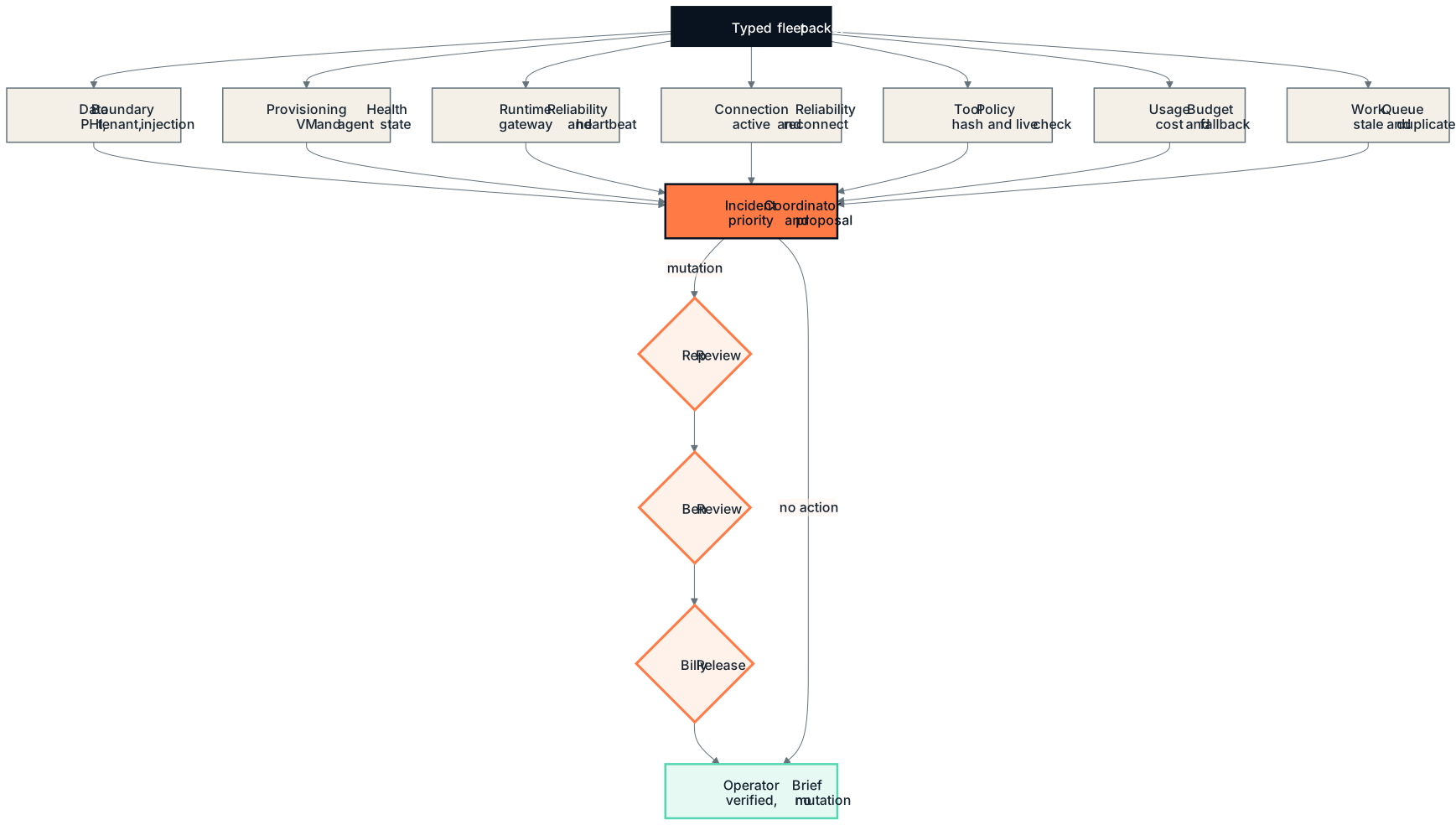
Seven specialist agents inspect provisioning, runtime, connections, tool policy, spend, queues, and data boundaries in parallel. One coordinator ranks the incident. Three named review gates control release.
Public boundary: no patient data, credentials, client records, VM access, CRM access, ads, messages, or task mutations.
LIVE SYNTHETIC WORKBENCH
The controls below call the deployed API. Presets alter real inputs, deterministic policies choose different actions, and LangGraph pauses at each required reviewer.
Select a preset, edit any input, then run the council.
The graph is evaluating the fleet.
No proposal was produced.
Dry run onlySYSTEM ARCHITECTURE
Independent analyzers reduce blind spots and latency. A deterministic coordinator resolves priority. Review remains sequential because release authority cannot be averaged across agents.
REST and generated OpenAPI are easy to inspect, test in Postman, and call from the existing web product. GraphQL and gRPC add no useful value for this bounded command surface.
Pydantic rejects malformed or oversized packets before orchestration. Flask would require validation and API documentation to be rebuilt manually.
Explicit graph state makes parallel analysis, checkpoints, role order, rejection, and replay testable. Free-form agent chat does not provide the same control.
PHI, tenant, heartbeat, budget, tool, and queue rules stay deterministic. An optional model can rewrite a verified brief, never decide access or execute tools.
PRODUCTION ASSURANCE
Golden cases score schema, decisions, privacy, tenant isolation, policy math, grounding, approval enforcement, injection resistance, latency, steps, cost, and replay consistency.
Structured traces cover graph nodes, transitions, evidence, approvals, policy state, errors, latency, tokens, and cost. LangSmith, OTLP, and Sentry exporters remain off until keys are supplied.
A private pilot would bind approved actions to existing Supabase RBAC, fleet, connection, tool-sync, audit, and cron seams behind feature flags and staging UAT.
Why no Kubernetes here? This public workload is small, stateless at the web edge, and deployed on Vercel. Docker proves portability. Kubernetes becomes justified only with sustained fleet traffic, queue workers, regional availability targets, and an operating team prepared to own the cluster.